
Natural Ways to Help Constipation, Part 1 – Abdominal Massage
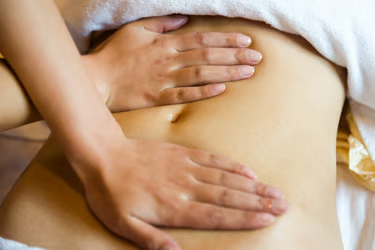
Abdominal Massage & Constipation
Constipation is a common digestive issue affecting many people worldwide, so it is no surprise that people often look for natural ways to help relieve it. Abdominal massage is one option that may be beneficial.
In Australia, constipation is estimated to affect between 3% and 30% of the adult population, depending on the study. It is generally defined as infrequent bowel movements or difficulty passing stools.
While occasional constipation is common and often resolves on its own, chronic or persistent constipation may require further investigation to identify any underlying causes.
Part of the Natural Ways to Help Constipation series:
- Part 1: Abdominal Massage (this article)
- Part 2: Using a Poop Stool
- Part 3: Toilet Habits
Signs you may be constipated
You may be experiencing constipation if you notice:
- Fewer than three bowel movements per week
- A reduction in what is normal for you
- Difficulty passing stool or straining
- Passing small amounts of stool
- A feeling of incomplete emptying
- Dry, hard, lumpy stools or pellet-like stools
If these symptoms persist for more than a week despite your efforts to improve them, it is advisable to see your GP—particularly if symptoms are worsening, you have abdominal pain, or notice blood in your stool or from the rectum.
Natural ways to help constipation
There are many ways to support bowel function. In this blog series, I explore natural approaches that may help improve constipation and support digestive health.
In this article, we will focus on abdominal massage.
How abdominal massage may help constipation
Abdominal massage may also be referred to as tummy massage, stomach massage, visceral massage, or Chi Nei Tsang (a traditional abdominal therapy). In clinical practice, it may also include visceral osteopathy (or visceral manipulation)—a hands-on approach that focuses on the internal organs and their supporting tissues.
1. Stimulating bowel movements
One of the key ways abdominal massage may help constipation is by stimulating bowel activity.
This can support peristalsis—the wave-like contractions of the intestines that move stool through the digestive tract. Improving peristalsis may make stool easier to pass and help regulate bowel movements.
2. Reducing bloating and gas
Constipation is often accompanied by bloating and gas, which can increase discomfort.
Abdominal massage may help reduce these symptoms by encouraging movement within the digestive tract and supporting the release of trapped gas.
3. Releasing abdominal tension
Tension within the abdominal muscles and surrounding tissues can place pressure on the digestive organs and potentially restrict normal movement.
There may also be restrictions in the connective tissues (fascia and ligaments) that support the organs. These restrictions can contribute to slower digestion.
By gently releasing tension in these tissues, abdominal massage may support improved digestive function and relieve constipation.
4. Supporting circulation and lymphatic flow
Abdominal massage may also assist with:
- Blood circulation to the digestive organs
- Lymphatic drainage
The lymphatic system plays a role in clearing waste products from the body. Supporting these processes may help the body’s natural elimination pathways and contribute to improved bowel regularity.
5. Supporting the gut–brain connection
Abdominal massage may also have a calming effect on the nervous system.
Many people notice they hold stress in their abdomen. Gentle treatment can help promote relaxation, which may reduce stress-related digestive symptoms.
This is partly linked to the vagus nerve, which plays an important role in the parasympathetic nervous system (the “rest and digest” state).
Stimulating this system may support digestion and bowel function by encouraging a more relaxed physiological state.
What does the research say?
There is growing research suggesting that abdominal massage may help relieve constipation. While findings are promising, more research is needed to fully understand its effectiveness across different populations and to determine optimal treatment approaches.
Key findings from current research include:
- Improvements in bowel movement frequency
- Reduced straining and discomfort
- Improved stool consistency
- Reduced bloating
- Improved quality of life
Some studies have shown positive outcomes in older adults, including those in hospital settings, as well as individuals experiencing opioid-induced constipation.
Meta-analyses have also suggested that abdominal massage may be a useful adjunct in managing functional constipation, although further high-quality research is needed.
Gut microbiome considerations
Emerging research also suggests a potential link between abdominal massage and improvements in the gut microbiome.
By increasing circulation to the abdominal area, massage may support the environment in which beneficial gut bacteria thrive. Some early studies have shown changes in microbial populations alongside improvements in metabolic health, although this area requires further investigation.
Other considerations
Abdominal massage may be a useful addition to a broader, holistic approach to managing constipation.
It is important to also consider:
- Diet and fibre intake
- Hydration
- Physical activity
- Stress levels
These factors can significantly influence digestive function and may enhance the effects of manual therapies.
When to seek professional advice
If you are experiencing ongoing or severe constipation, it is important to seek guidance from a healthcare professional.
This is particularly important if you:
- Have a diagnosed gastrointestinal condition
- Experience persistent or worsening symptoms
- Notice blood in your stool
- Have significant abdominal pain
Certain conditions, such as Crohn’s disease, ulcerative colitis, or diverticulitis, may require caution—particularly during acute flare-ups.
A healthcare provider can assess your individual situation and advise whether abdominal massage is appropriate for you.
Final thoughts
Abdominal massage is a gentle, non-invasive approach that may help relieve constipation and support digestive health.
While research is still evolving, it may offer benefit—particularly when used alongside other lifestyle and dietary strategies.
As with any treatment, individual responses can vary, and a personalised approach is always recommended.
Next in this series:
Natural Ways to Help Constipation (Part 2): Using a Poop Stool
Support for ongoing constipation
If you are experiencing persistent constipation or difficulty with bowel function, a more individualised approach may help.
At Topaz Health, visceral osteopathy offers a gentle, hands-on approach that supports the abdomen, digestive system, and nervous system to improve overall gut function.
You can learn more or book an appointment online.
References
- Nouhi E et al. (2022). Effect of abdominal massage on constipation in elderly patients.
- Olgun S & Eser I. (2022). Abdominal massage and chronic constipation in older adults.
- Yıldırım D et al. (2019). Abdominal massage for opioid-induced constipation.
- Kayıkçı EE et al. (2020). Systematic review: abdominal massage and constipation.
- Gu X et al. (2023). Meta-analysis: abdominal massage for functional constipation.
- Xie Y et al. (2022). Abdominal massage, gut microbiota and metabolic health.